
 English


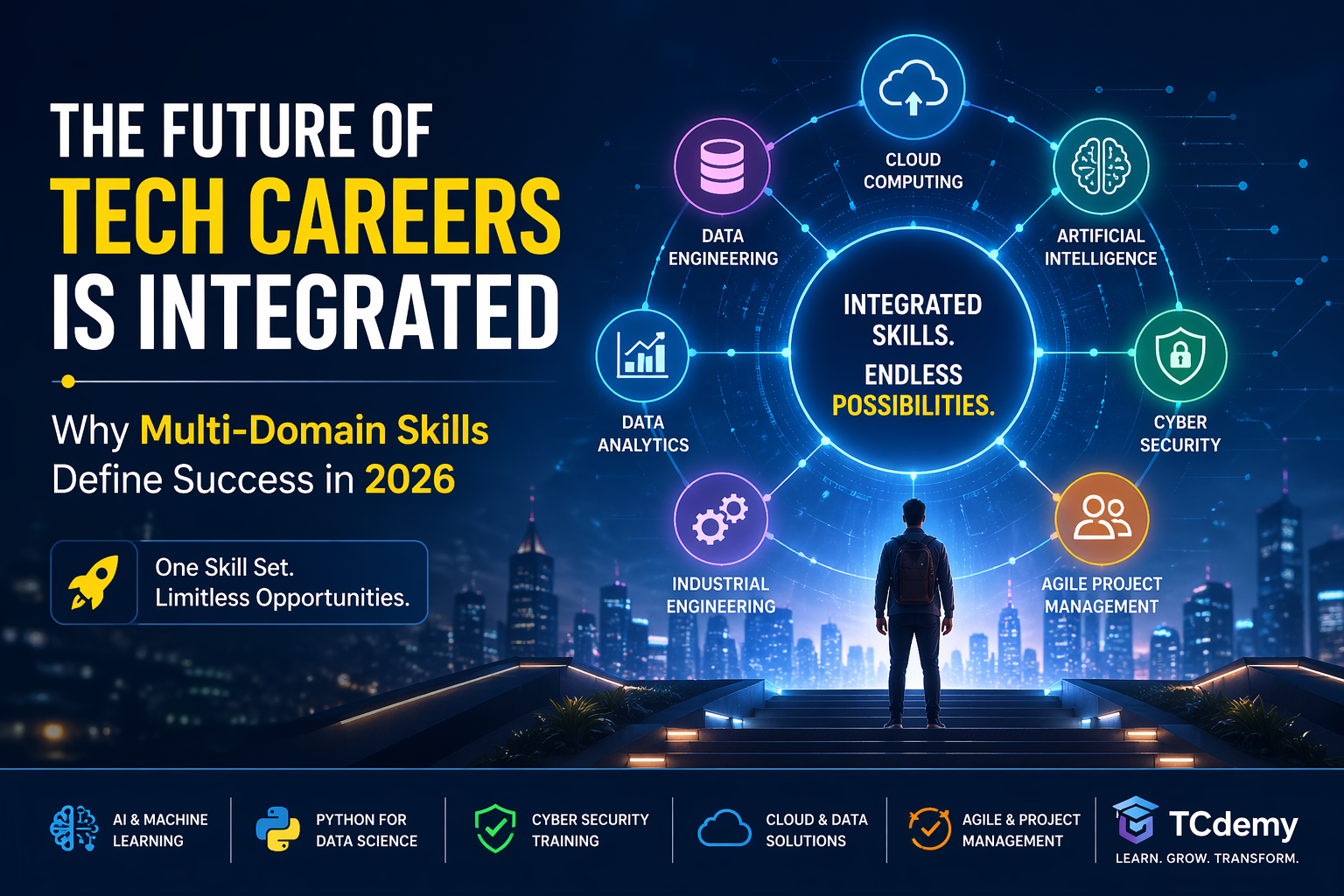
The future of technology is not being built in silos. It is being built at the intersection of cloud, data, artificial intelligence, and security — where systems communicate, decisions are automated, and businesses scale faster than ever before. In this environment, professionals who limit themselves to a single skill are quickly becoming outdated.
The real advantage today lies in understanding how technologies connect and how they create impact together.
 As organizations increasingly rely on cloud ecosystems, the ability to work with scalable data systems has become essential. An Azure data engineering course equips professionals
with the expertise to design and manage modern data architectures that power digital platforms. When combined with an Azure data science certification, this capability evolves into something more powerful — the ability to transform data into intelligence that drives business strategy.
 However, as digital transformation accelerates, so does the importance of security. Today’s businesses are not just building systems — they are protecting ecosystems. A comprehensive cyber security course supported by advanced cyber security training
enables professionals to identify risks, safeguard infrastructure, and ensure continuity in an increasingly vulnerable digital landscape. Security is no longer a reactive function; it is a foundational layer of every successful organization.
 Parallel to this evolution, Artificial Intelligence is redefining how work is executed. From predictive analytics to intelligent automation, AI is no longer experimental — it is operational. A machine learning course or an AI and machine learning certification
allows professionals to build systems that learn, adapt, and improve continuously. At the same time, modern advancements such as a generative AI course or a ChatGPT course
online introduce a new dimension of productivity, enabling automation in content, communication, and workflows across industries.
 An industrial engineering course today integrates digital technologies, operational efficiency, and system optimization. When combined with broader IT and engineering courses, professionals gain the ability to bridge the gap between technical systems and
real-world business applications — a capability that is increasingly valued across industries. But knowledge alone is not enough.
Execution, adaptability, and delivery define success in today’s environment. This is where modern methodologies come into play. An agile project management course with AI equips professionals with the ability to manage dynamic environments, respond to change
effectively, and deliver results using intelligent tools. Backed by an agile certification online, this ensures alignment with global practices and industry expectations.

